
58 KM Mining Hauling Road
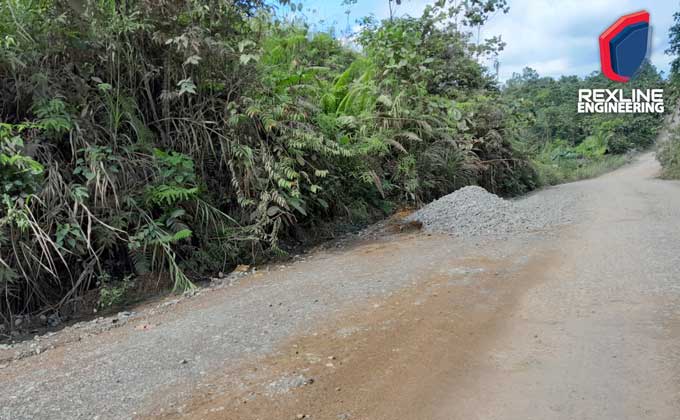
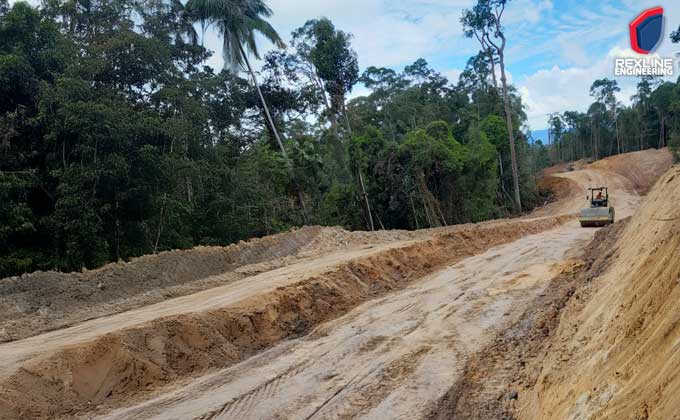
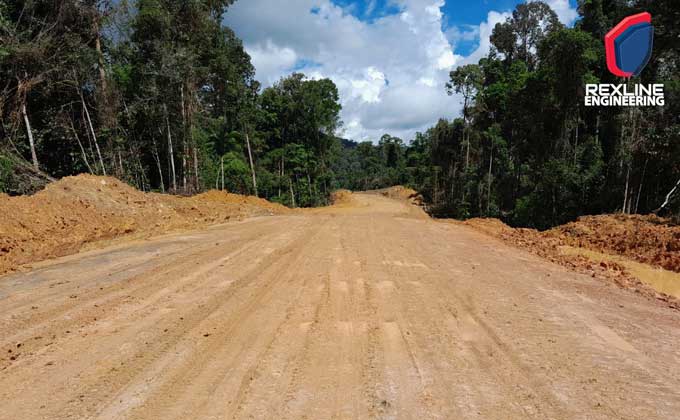
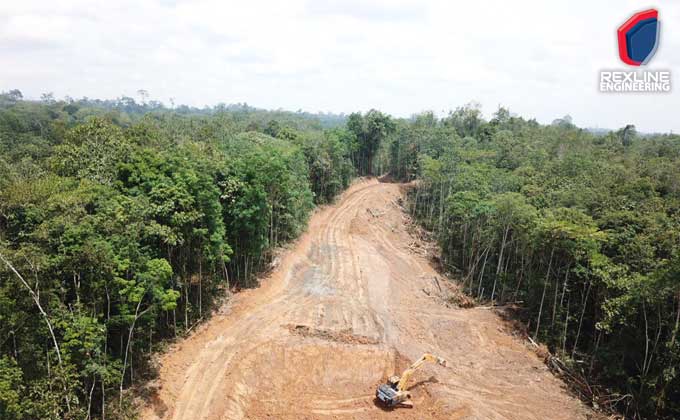


SCOPE OF WORK
Gravel with Laterite Red Soil for Hauling Road Purposes – General Requirements
- Compliance with all relevant local and international standards for road construction.
- Adherence to pavement design parameters as outlined below.
- Quality assurance through on-site testing (CBR, compaction, material gradation).
- Environmental protection and safe working practices throughout construction.
Pavement Design Criteria
- Design Load: 40-tonne dump trucks (gross vehicle weight)
- Road Width: 8–12 meters
- Total Pavement Thickness: 30 cm
- Design Method: CBR curve method (Atkinson, 1992)
- Pavement Layers
- Subgrade: In-situ soil with CBR < 6%
- Base Course: Gravel C(7/10)
- Surface Course: Gravel B(2/3)
Detailed Work Breakdown
1.1. Site Preparation
- Clearing and Grubbing: Removal of vegetation, roots, stumps, debris, and organic material from the alignment.
- Stripping Topsoil: Remove unsuitable topsoil to expose the subgrade.
- Earthworks: Cut and fill operations to achieve the desired road profile and camber. Ensure drainage cross fall/camber of approximately 3% to prevent water stagnation.
- Subgrade Evaluation: Conduct field CBR testing to confirm strength < 6%.
- Compaction: Compact subgrade to 95% Modified Proctor Density (MPD).
- Stabilization (if required): Use lime, cement, or geotextile/geogrid in areas with extremely weak subgrade.
- Material Requirements: Gravel with gradation C(7/10), conforming to project specifications.
- Layer Thickness: Lay to appropriate thickness (typically 20 cm out of total 30 cm if not otherwise split).
- Placement and Compaction: Place evenly with motor grader.
- Compact in layers using vibratory rollers to 98% MPD.
- Moisture Conditioning: Ensure optimal moisture content during compaction.
- Material Requirements: Hard, angular gravel with gradation B(2/3) for wear resistance and skid resistance.
- Layer Thickness: Apply remaining pavement thickness (typically 10 cm).
- Placement and Finishing: Place with motor grader for uniform thickness.
- Compact with steel drum roller.
- Ensure final camber for water runoff (typically 3–5%).
1.5. Drainage System
- Side Drains: Excavate trapezoidal side drains or construct lined V-drains to prevent water pooling.
- Culverts and Cross Drains: Install at low points or crossings to maintain natural water flow.
- Ensure drainage cross fall/camber of approximately 3% to prevent water stagnation.
- Horizontal Alignment: Maintain safe turning radius for 40T trucks.
- Vertical Alignment: Design to accommodate acceptable grades (ideally less than 8% for haul trucks).
- Signage and Delineation: Install temporary or permanent markers, signs, and reflectors as required.
- Material Testing: Gradation test (sieve analysis), Atterberg limits, compaction test (Proctor), and CBR.
- Field Density Testing: Sand cone or nuclear gauge for in-situ compaction verification.
- Level and Thickness Surveys: Conduct using total station or GPS equipment.
- Initial Maintenance Period: Address rutting, potholes, and erosion during the early use period.
- Defect Monitoring: Regular inspection and repair during the defect liability period.
- Site plan showing alignment and drainage
- Daily progress reports and QC records
- As-built drawings and compaction test reports
- Material source approvals and gradation certificates